

The move
Prompted by the opportunity to apply for a writing retreat, but being completed limited by being a family runner, I wrote this fiction of a garden writer in older years who gets the chance to retreat.

“You didn’t tidy away your lunch bowl,” were his last words on this scorched earth as Tom slumped forward, then sideways, gasped and heaved and hit his head on the potting table on the way down.
As far as endings go, it wasn’t an ideal moment to witness and Mags would have preferred not to have seen her stressed out husband of thirty years complete his journey around the sun right there in their London garden.
Of course and it goes without saying that she was genuinely upset and did all the right things, she’s good in a crisis they’ve always said so, but there was nothing for it truly. A heart attack was a fear she’d long held for him with his Protestant work ethic keeping him at the laptop seven days.
They had just laughed together that morning about his annoying habits. “I like to play a game to imagine how annoying this is to you,” he said as he breathed near her.
He joked about the annoying things he did - breathing, eating more than one crisp at a time, sometimes as many as eight in one mouthful, and obviously snoring.
Mags had said “If I ever annoy you, just release me. I’ll go and find a house in the hills and I’ll write and I won’t have to cook for anyone.” He had thought she was joking.
She’d seen the ideal house on Inigo, all Farrow and Balled, triple glazing, the right size for a writer. It had chased her around all the social platforms, until she had actively wished it to be hers.
Since she was a child she had visited Cwm-Y-Llan, the valley with the ancient church, where her parents had cobbled together a splot of lime mortar and the remnants of a stone cottage where she had learned to read the water in the stream and the rise of the well, knew the timings of the lambs being usher up the main road by the farmer, and the spot where a teenager might drink undetected under an ancient hawthorn by the mossy stone wall where the spring seeped.
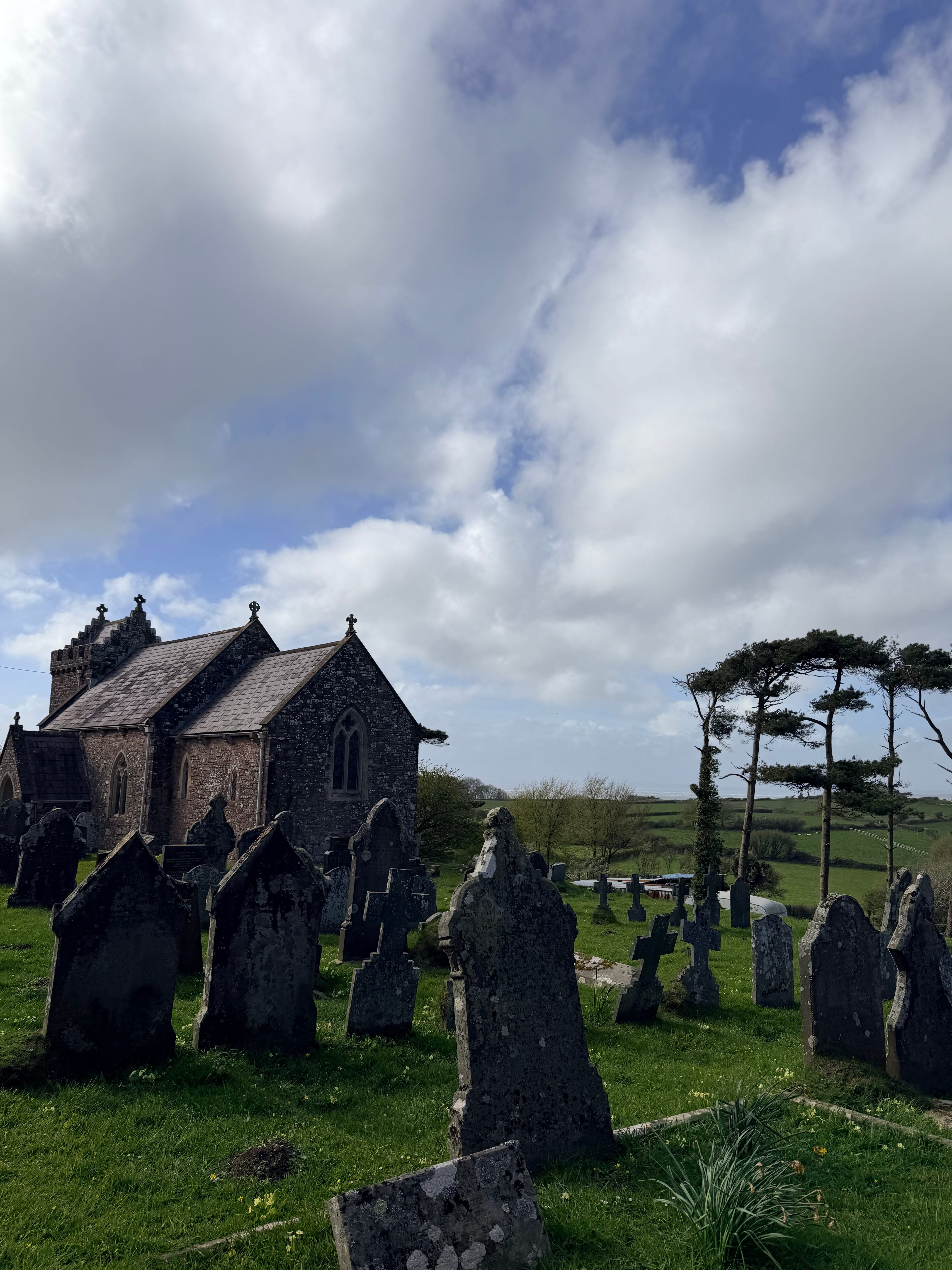
Her parents had let it go years ago. But it was the big house further up the hill that pursued her via that dusky-hued web listing, where the well was dug deep and the allt hung beech trees on side of the hill.
The waxed cedar desk she found on Vinted slotted perfectly in the bay window that took in the sloping lawn down to the sea. To the right she could see one of the many megaliths around this way. To the left, a hydrangea hedge the kind that was never planted and could never be moved and endured through all dry spells and harsh winters.
Pinks and blues flashed over the shallow waters here at sunset, as ponies drifted madly nipping at each other and bustling through the gorse further towards the rocky tip of the land.
In the end it was not heard to leave the London garden, as she thought it would be. All she took was the potting table and a conker from the tree she had planted when her son was born. The spirit of that ideal family garden left for the new owners to discover as their own children emerged into bright young things as hers had.
A kettle, good tea, this desk, the view. Finally. No voice from the kitchen, or hall, or scullery asking why a box had been left here, why there were no more eggs. No loud sighs at the growing pile of recycling by the back door.
Her life had become the writer’s retreat she had previously so desperately carved out of the few hours she had to herself between the daily duties, and evening complaints and explaining herself.
She would now have the space and time, finally, simply to write. Leave things where they made sense to her, and where she fancied. Not a single thing she had to justify or explain.
Modern simplicity complemented the huge stone flags and the two foot thick walls. It was the ideal set up with the potting table near the back door for a little break form the desk, her folkloric almanac coming along just so and the small village shop with her lunch prepared by volunteers.
It took a week of constantly picking up her hori hori each morning from the huge flagstone outside the Setting Plaster-hued back door for her to notice things on the potting table were tidier each day than she had perfectly reasonably left them. Her old red secateurs, copper trowel and snips now lined up unnecessarily neatly.
Forgetful though she had been through perimenopause, she knew exactly where it was she wanted to keep her essentials. Laid right where she left them, in her own way in her own home, by the pots and soil where they were used. She was not one to have to clean and tidy her blade after every bit of weeding or planting. But she knew who was
.